PAIA Lab

Perception, AI, and Autonomy Lab

Department of Electrical and Computer Engineering
The University of Texas Rio Grande Valley

Welcome to PAIA Lab

The Perception, AI, and Autonomy Lab (PAIA Lab) is a research group in the Department of Electrical and Computer Engineering at The University of Texas Rio Grande Valley.

Our research focuses on intelligent autonomous systems and Physical AI that can perceive, understand, reason about, and interact with the real world. We develop integrated approaches that bring together multimodal sensing and sensor fusion, deep perception, AI-driven scene understanding and reasoning, and intelligent decision-making and action. Our long-term goal is to enable robust, adaptive, and trustworthy autonomous systems that can understand complex real-world environments and act intelligently within them.

Current research includes multimodal perception, robotics and Physical AI, Edge AI and hardware-aware AI, world models, and reliable and safety-aware AI for autonomous systems, with applications in autonomous driving, intelligent transportation, advanced manufacturing, smart agriculture, and real-world robotic systems.

We expect the autonomous systems of the coming decade to rely on models that carry much broader knowledge of the physical world than today's task-specific pipelines. We are particularly interested in how these models can be held accountable to physical evidence and real-world constraints, and how a system can tell where its own understanding runs out instead of failing quietly.
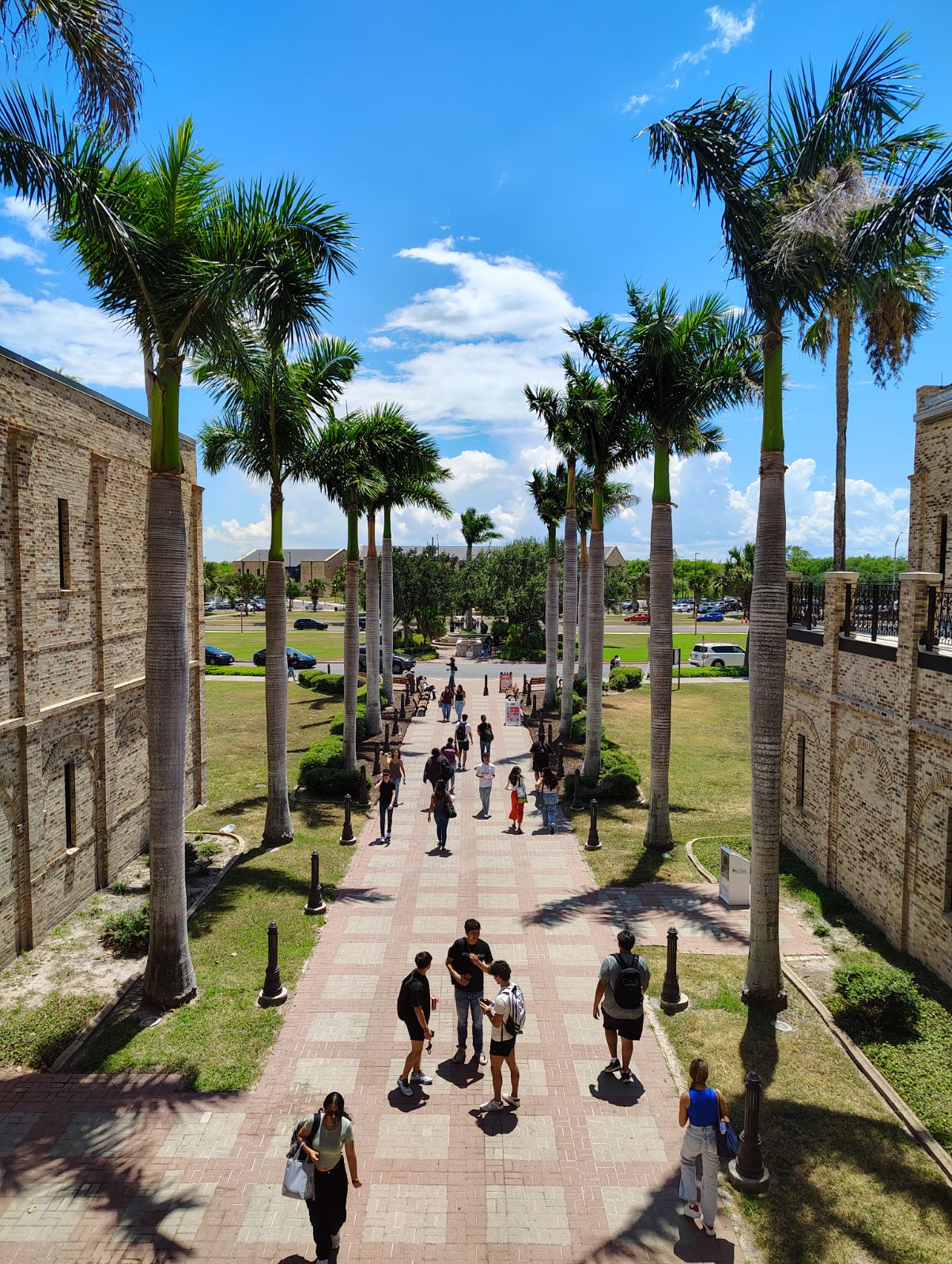
UTRGV Brownsville campus walkway

News

All news

New USDOT-funded research project on intelligent wearable safety systems

Dr. Lei Cheng serves as Co-PI on the $150K University Transportation Center for Railway Safety (UTCRS) project BEACON, developing multi-sensor and machine-learning technologies for worker safety in high-risk railway and transportation environments.

Joined UTRGV and established PAIA Lab

Dr. Lei Cheng joined The University of Texas Rio Grande Valley (UTRGV) as a tenure-track Assistant Professor in Electrical and Computer Engineering, and established the Perception, AI, and Autonomy Lab (PAIA Lab).

PI award from Maryland DOT SHA

Awarded a $150K research project as PI through M-TRAIL, funded by the Maryland Department of Transportation SHA.

Paper accepted to IEEE Transactions on Instrumentation and Measurement

CalibRefine, our online targetless LiDAR–camera calibration framework, was accepted to IEEE T-IM.

Research Topics

More Research

Multimodal Perception and Sensor Fusion

We study perception using camera, radar, LiDAR, GNSS, and other sensing modalities, with emphasis on calibration, sensor fusion, uncertainty, robustness, and operation under sensor degradation.

Multimodal AI for Autonomous Systems

We investigate multimodal and foundation models that combine sensor observations, geometry, motion, language, and semantics for physically grounded scene understanding and autonomous reasoning.

Intelligent Prediction, Control, and Planning

We study how perception and uncertainty can inform prediction, control, and planning for autonomous driving, intelligent transportation, robotics, and other physical autonomous systems.

Acknowledgements

We gratefully acknowledge the agencies and industry partners that have supported research projects the PI has contributed to.